Branded
URL
System
Case Study
Branded URL Infrastructure Prototype
Designing an authenticated link-shortening system to explore internal link ownership, branded distribution and potential SaaS extensibility.
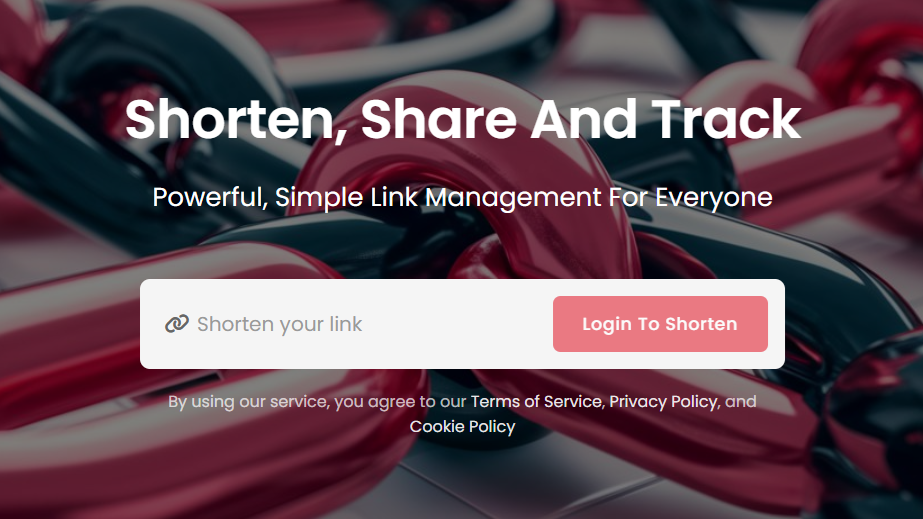
External Dependencies
While working in a content-driven environment, social distribution relied on external URL-shortening services. Every shared link passed through third-party infrastructure, introducing several limitations:
- Lack of branded link ownership
- Dependency on third-party shortening tools
- Limited control over internal link infrastructure
To explore technical capabilities and internal tooling possibilities, a prototype branded URL shortener was developed. The project also served as an opportunity to validate product-thinking and backend architecture skills.
If We Owned the Infrastructure
If a branded internal URL shortening system could be built:
- Links could align with brand identity
- Ownership of link infrastructure would improve
- Internal teams could control link distribution
- The system could potentially evolve into a standalone SaaS product
This experiment was built to test that concept.
Serverless Technical Stack
The system was designed to be lightweight, serverless and easily scalable using Firebase infrastructure.
Interaction Flow
The system follows a linear authentication-to-redirect pipeline with branching logic for duplicate detection.
Potential SaaS Extensibility
During evaluation of the prototype, the possibility of expanding the system into a SaaS product was discussed. This highlighted potential areas of expansion:
The prototype primarily served as a proof-of-concept exploring both internal infrastructure tooling and potential productization pathways.
What This Taught Me
- Building lightweight infrastructure tools can reveal opportunities for internal efficiency.
- Serverless stacks such as Firebase significantly reduce operational complexity.
- Authentication, validation logic and database mapping are core building blocks of most SaaS tools.
- Not every prototype needs to become a product, technical exploration itself builds valuable systems thinking.